Fire Safety When Using Electrosurgical Devices
One of the largest risks for fire when using electrosurgical devices is inadvertently activating the device on the surgical drape or on dry sponges. Care must be taken to ensure that the electrical surgical handpiece is always placed securely in a plastic holster when not in use.
ORNAC safety considerations when using electrosurgical devices
Review the ORNAC standards 3.37 for full guidance on the use of electrosurgical devices. KEY considerations include:
- Exercising caution when using energy-generating devices near oxygen sources, such as surgical procedures on the face.
- Always use the lowest power setting needed for the surgical procedure. Always question requests for an increase in power settings.
- Ensuring that prep solutions have not pooled under the patient. Alcohol-based prep solutions must be completely dry before using electrosurgical devices.
- Avoiding contact between the patient and any metal object such as the metal portions of the bed, IV pole, or other tables, as these could constitute a path of least resistance and cause a burn.
- Ensuring that the patient removes all metal jewelry or hair pieces to avoid potential burns. If the patient refuses or cannot remove jewelry, ensure that you provide education on the risks and document this.
(ORNAC, 2021)
Electrosurgical Handpiece Safety
When not in use, the handpiece must be placed in a protective holster to prevent accidental activation.
- Ensure that the cord for the electrosurgical device is free of kinks and coils and not wrapped around any metal objects to reduce the risk of capacitive coupling.
- Electrosurgical devices should only be activated when in contact with the desired tissue/instrument and only activated by the operator holding the device.
- Any eschar build up should be frequently removed from the device tip. This helps to reduce the impedance and resistance. Eschar can be removed with a scratch pad or if the tip is coated with Teflon, it can be removed with a moist sponge.
(ORNAC, 2021)
Disposable Dispersive Electrode/Return Electrode Monitoring (Cautery Pad) Safety.
It is vital the appropriate size of dispersive electrode pad be used. This is determined by weight in pediatric patients. Always use the pad with the largest possible surface area. Do not cut or adjust the size of the dispersive electrode pad.
When placing the pad, ensure that:
- It is in an area where it will stay dry and remain protected from potential fluid spills.
- It is located as close as possible to the surgical site, overtop of a muscular area.
- The entire pad has uniform contact to skin.
- Excessive hair, oils, or lotion have been removed to help the pad adhere appropriately.
- It is placed proximal to tourniquet placement as adequate tissue perfusion is required for conduction of electricity.
- The pad is placed away from any implantable devices, as well as tattoos.
- Once applied, the pad is not removed and reapplied or adjusted. If this happens, a new pad must be used.
- The pad is placed on the patient after all positioning is completed.
(ORNAC, 2021)
🧠 Graded Activity
In Blackboard, complete the Graded Activity: Get ready to Ground!
Argon Surgical Energy Device
This device uses both monopolar and bipolar energy combined with argon gas to provide enhanced coagulation therapy. The argon gas helps to disperse blood, clearing the tissue area being targeted which improves the visualization of the surgical site as cautery is used.
Watch this video for a visual understanding of how Argon-enhanced coagulation works:
Argon-enhanced coagulation may be used endoscopically. However, great care must be taken to ensure that the peritoneal cavity does not get over-pressurized with the added gas being instilled into the space.
(ORNAC, 2021)
📁 Documentation Highlight
The circulating nurse must ensure that the following information is documented related to any energy-generating devices used in a procedure:
- The type of unit along with its serial number.
- The location of the dispersive electrode pad, unless using only bipolar which does not require a pad.
- The condition of the patient’s skin at the dispersive electrode pad site, both before placement and after removal.
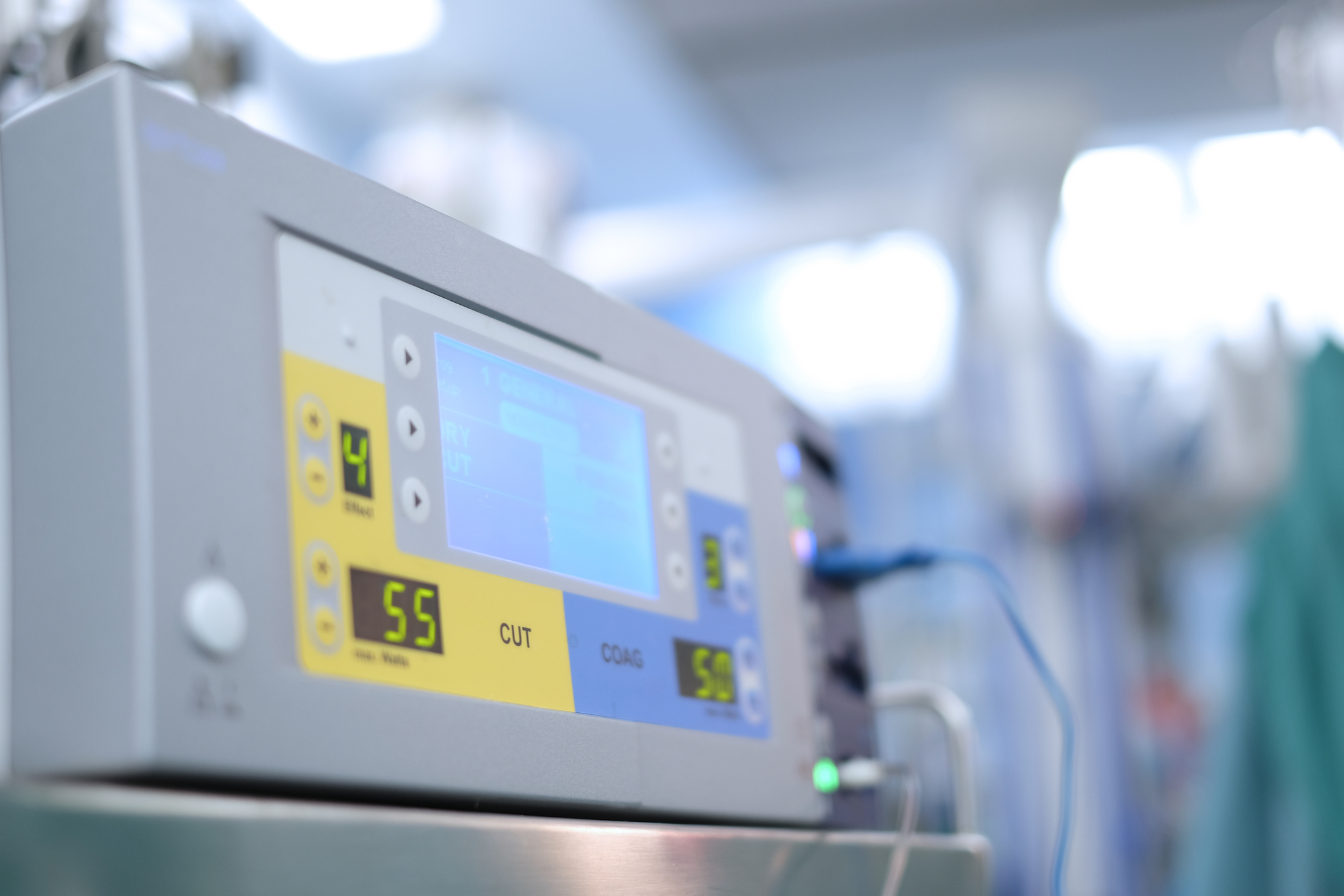
- The settings for cut and coag.
- Use of a safety holster on the sterile field.
- Documentation of discussion/education provided if the patient refuses or is unable to remove metal jewelry.