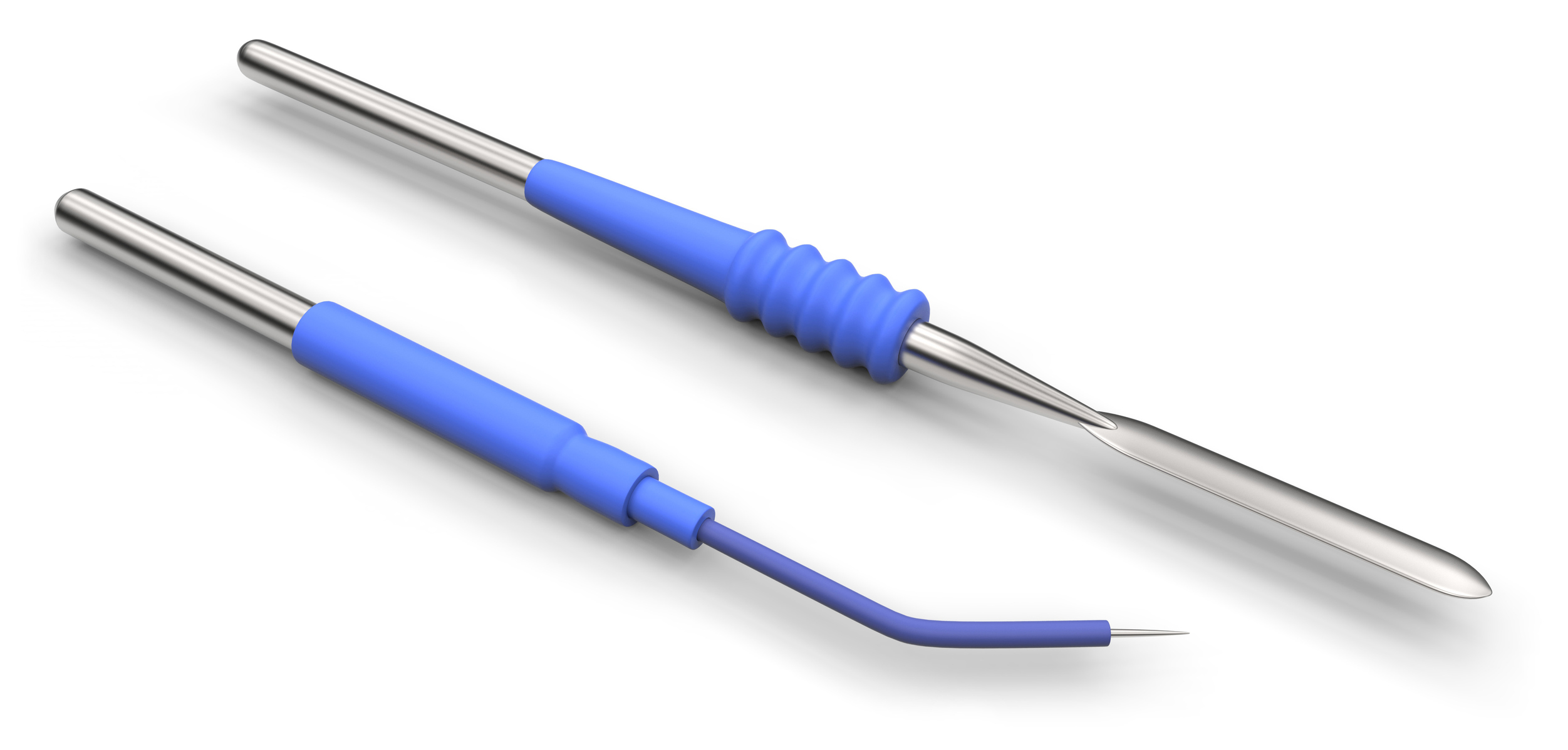
Modes of Electrosurgery
There are two main modes of electrical surgical energy used in surgery: Monopolar and Bipolar. These modes differ in how energy is delivered and returned to and from the generator to the surgical site.
Monopolar

This occurs when the energy source flows from the generator (electrosurgical unit) through an active electrode (the handpiece) into the patient. The current then travels to the dispersive electrode (the grounding pad) and back to the generator (electrosurgical unit).
It is vital that the dispersive electrode is large to disperse the energy leaving the body so it isn’t concentrated on a small area of tissue which could cause heat production and a potential burn.
Bipolar
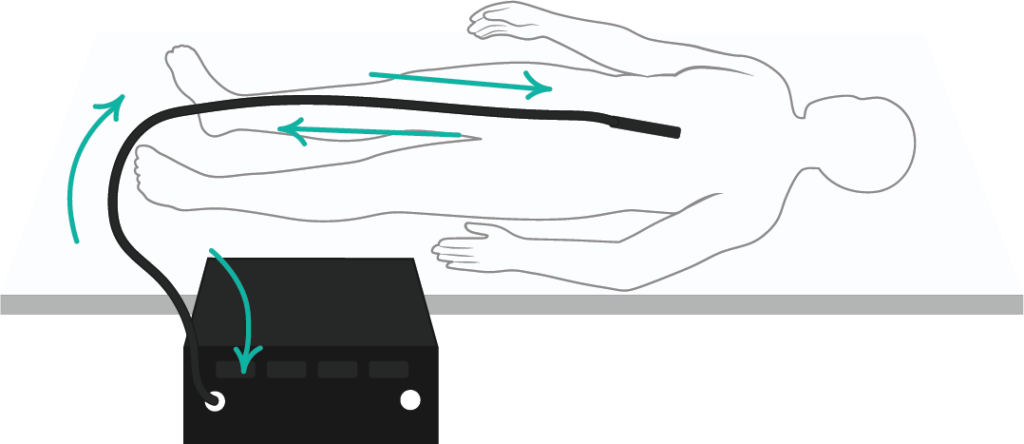
With Bipolar, the energy source flows from the generator (electrosurgical unit) through one side of an active electrode (the forcep handpiece) into the patient. The current then travels to the other side of the active electrode (the forcep handpiece) and back to the generator (electrosurgical unit).
No dispersive electrode (grounding pad) is required since the energy returns directly through the electrode instrument.
If there is a great amount of impedance, the energy/current flow is decreased.
(Ball, 2019)
Electrosurgical Effects on Tissue – Waveform
Electrosurgical units can change the effect on tissue based on the waveform of the energy. In the operating room, the different waveforms are demonstrated as pure cut, blend, and pure coag.
(Ball, 2019)
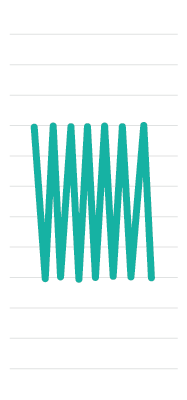
Pure Cut and Bipolar
100% On
Low Voltage 50 Watts
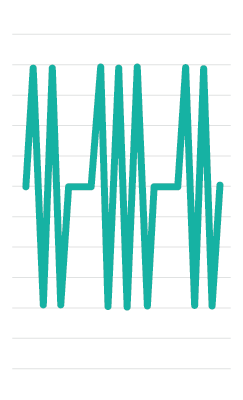
Blend
50% On
50% Off
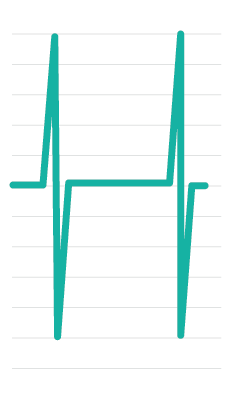
Pure Coag
6% On
94% Off
High Voltage 50 Watts
Other Electrosurgical Effects on Tissue
Besides waveform of the surgical energy, there are other variables that can be changed to obtain various effects on tissue. These include:
- The power setting – If you set the power higher, you will produce more extensive effects on the tissue.
- Length of exposure – The longer the tissue is exposed to the energy, the greater the effect.
- The size of the active electrode – Smaller electrodes will concentrate where the energy is being dispersed, causing higher levels of energy to be directed at a tissue. Larger electrodes will help to disperse the energy.
- Type of tissue – Because muscle tissue is vascular, it requires less power. Adipose tissue will require higher levels of energy because it does not conduct energy as well.
- Presence of eschar – Eschar is a poor conductor of energy, so when it is present it requires more power.
(Ball, 2019)