Surgical Count Process
The surgical count is a process for accounting for all items that are on the sterile field before and during the surgical procedure. There are two types of counts which can go by various names depending on your institution.
A minor/front page/small count: This includes sponges, sharps, and miscellaneous items (e.g., clip cartridges, cautery tips, suture reels, etc.) and is required for all procedures.
A major/full count: This occurs when sponges, sharps, miscellaneous items, and instruments have been accounted for. It is completed when a body cavity will be entered, or when a minimally invasive surgery involving a body cavity is involved (e.g., laparoscopic appendectomy).
In either case, surgical items are counted as they are introduced to the sterile field throughout the procedure. Surgical items are counted before and after use. Vaginal or rectal packing used in the procedure must also be counted. All surgical items are counted individually.
(Phillips, 2020)
Surgical Personnel Responsible for the Surgical Count
- The surgical count is a professional responsibility that relies on the circulating nurse and scrub personnel
- Surgical counts must be performed by two perioperative personnel; one must be a Perioperative Registered Nurse.
- Both nurses are accountable for the surgical count, as this is a shared responsibility.
- When performing the surgical counts, items need to be counted audibly and viewed by both the circulating nurse and scrub personnel.
- Items need to stay together until the initial count is completed.
- Personnel who perform the final counts are held accountable for the entire count.
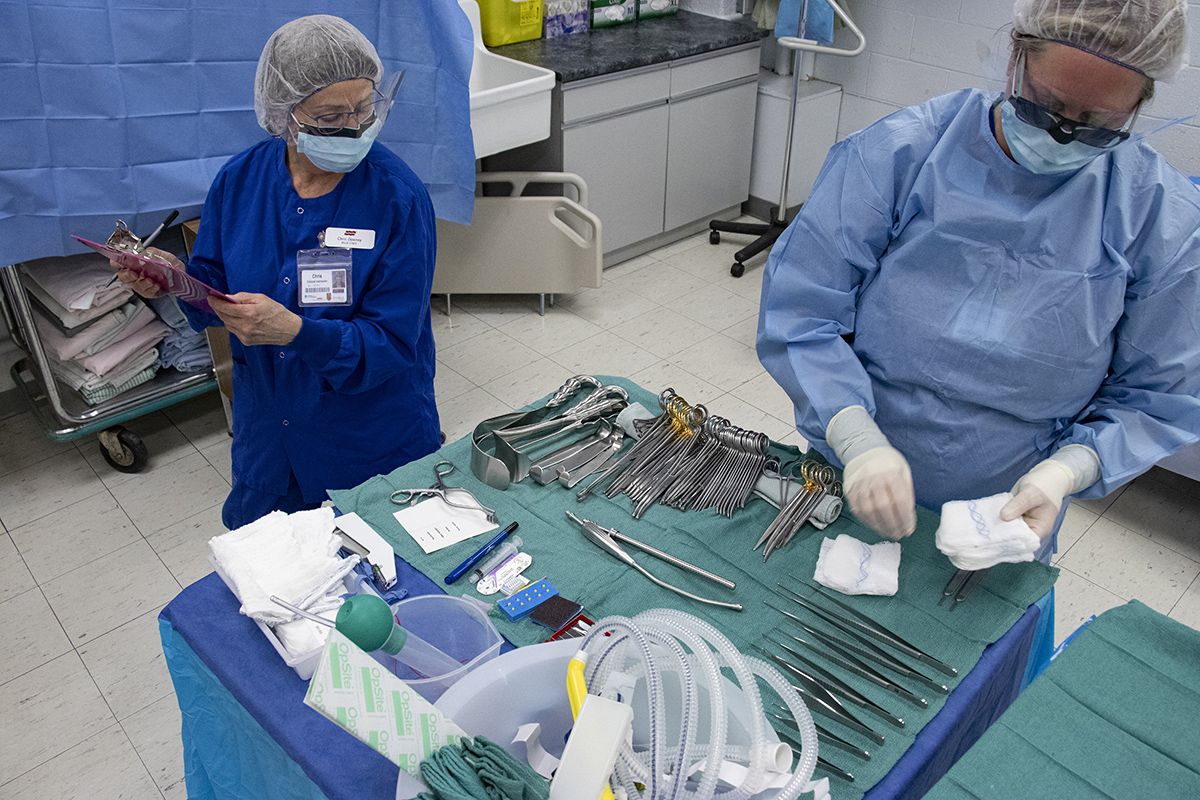
The Surgical Team’s Responsibility
Surgeons and First Assistants
Surgeons and First Assistants play an active role in preventing retained surgical items (RSI) by:
- Using radiopaque items (items visible by an X-ray)
- Being aware of items. always located in the surgical wound during the procedure.
- Communicating to the perioperative team when surgical items are being placed in the wound.
- Acknowledging the start of the count process.
Why do we need to count and be accountable for surgical items?
- Items can get lost in a patient’s body, causing potential harm, and requiring additional surgery.
- Items can get lost in linen or trash, potentially causing harm to others.
- Items can get lost from stock/inventory, increasing costs.
(AORN, 2022, Phillips, 2020 & ORNAC, 2021)
Timing of Surgical Counts
The timing of surgical counts is crucial in ensuring there are no retained surgical items. There must be minimal distractions of noise and unnecessary interruptions during the surgical count. It is recommended that; personnel create a no-interruption zone which prevents nonessential conversation or activities. This helps to prevent rushing the count.
Counts or activities that would require counting SHOULD NOT be performed during crucial phases of the procedure such as:
- Time-out periods
- Critical dissections
- Confirming and opening of implants
- General anesthesia induction and emergence
- Care and handling of specimens
Let us look deeper at the various times surgical counts are required…
(AORN, 2022 Phillips, 2020, ORNAC, 2021)
💬 Communication Highlight
Counts should not be communicated as correct until the physical count has been completed. X-raying a patient is not a replacement for the physical count.
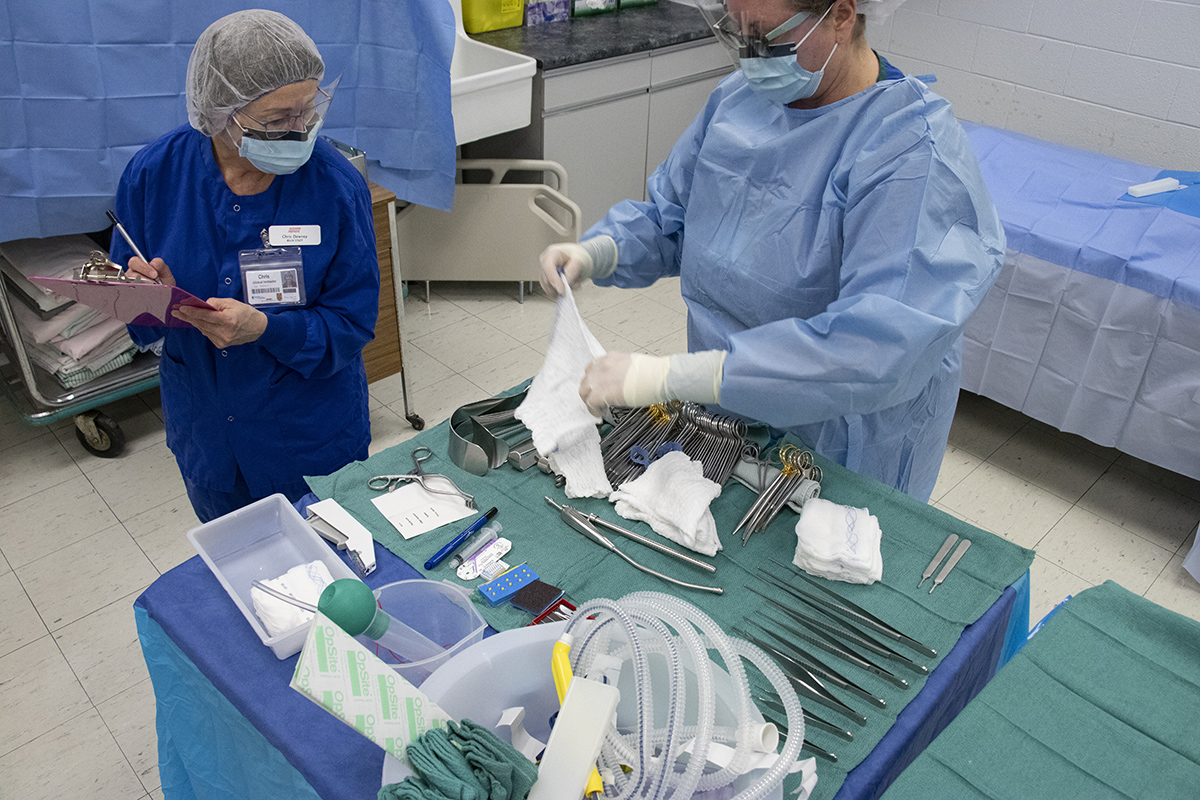
Surgical Items Required to be Counted
Items that have the potential for being retained should be included in the surgical count.
The following are counted for all procedures:
- Sponges
- Sharps
- Designated miscellaneous items
Entering a Cavity – Major Counts
When a body cavity is opened and entered at any time, there is a chance for an instrument to be retained. Therefore, instruments must be a part of the surgical count. For minimally invasive surgery involving a major body cavity, a full count is also required, as there may be a conversion to an open procedure. In the end, if the surgical team does not convert to an open procedure, a minor count can be completed.
(ORNAC, 2021 & AORN, 2022)
Body Cavities Requiring Full Count (select the + hotspots in the image to reveal information):