Categories of Instruments
There are four basic categories of surgical instrumentation:


The design of instruments in these categories is different depending on the tissue types and anatomical locations. The following examples show the difference between instruments used for general surgery and soft tissue and instruments in the same category used for tougher tissue and bones during orthopedic surgery.
(Tighe, 2016).
Cutting/Dissecting
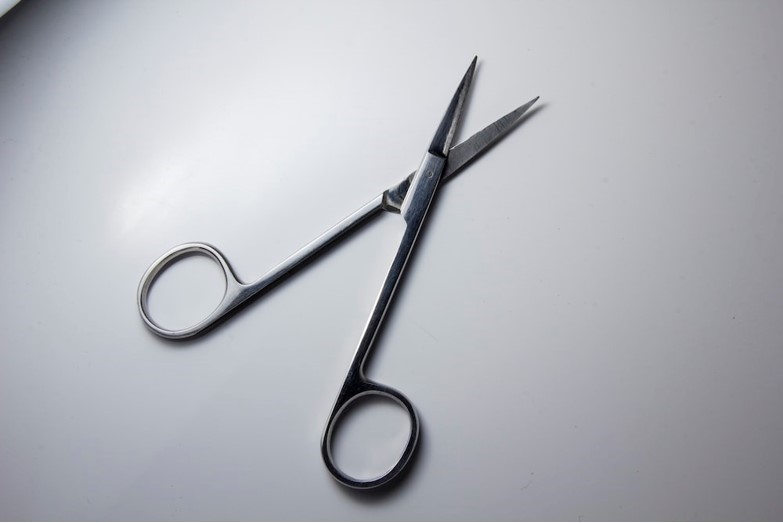
Sharp dissecting instruments can be found in all instrument sets. Most commonly, scissors are used for dissecting soft tissue. Other cutting instruments have been designed for different tissue types and anatomical locations. Below are sharp dissecting scissors used for soft tissue in general surgery and elsewhere.
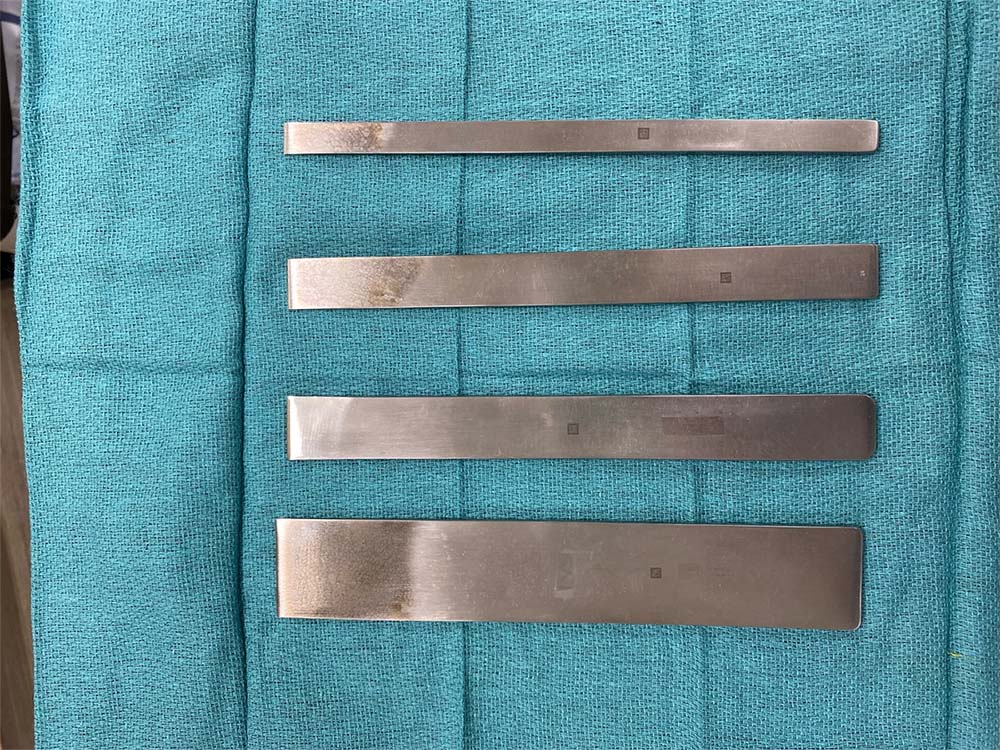
Battery-operated, electric or compressed air saws with varying blade types and actions are used to cut bone. (cutting/dissecting instruments used in orthopedics)
Clamps
Clamps are designed for hemostasis, occluding, or grasping/holding. Clamp tips dictate their purpose. For example hemostats with horizontal serrations crush tissue to create hemostasis; babcocks are ‘soft’ clamps used to grasp delicate bowel and other tissues without causing damage.
Let’s look at clamping instrument examples. Compare clamps used in an abdominal laparotomy set versus clamps used in orthopedics.
(Cromb, 2019)
Assorted Laparotomy Clamps
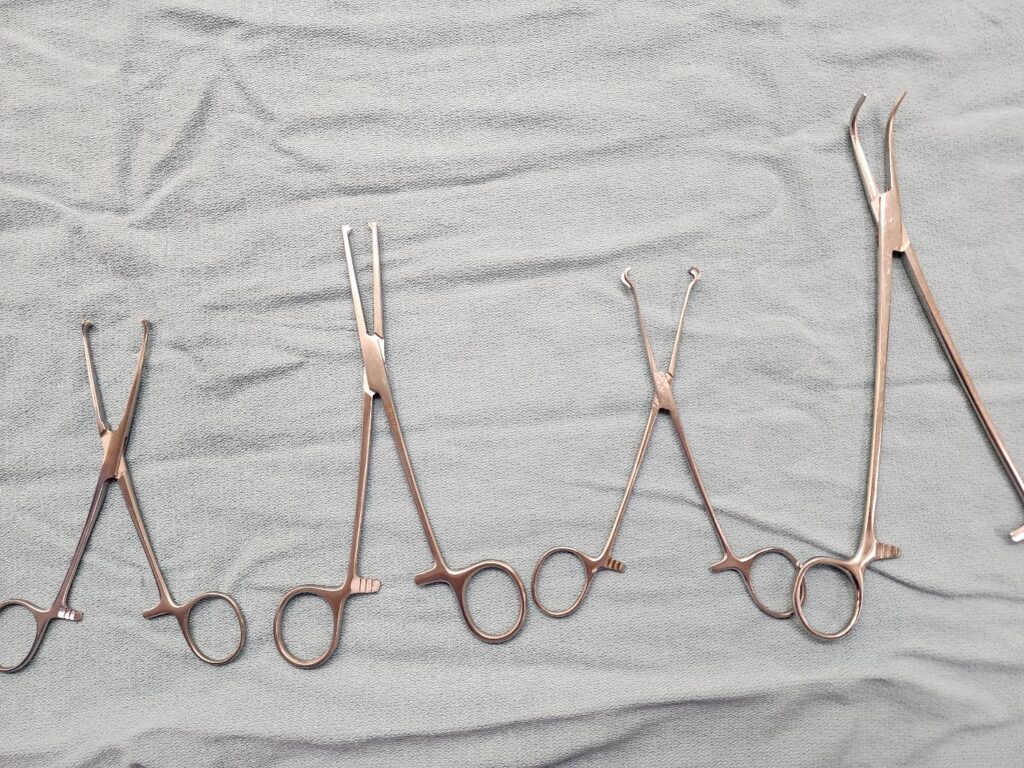
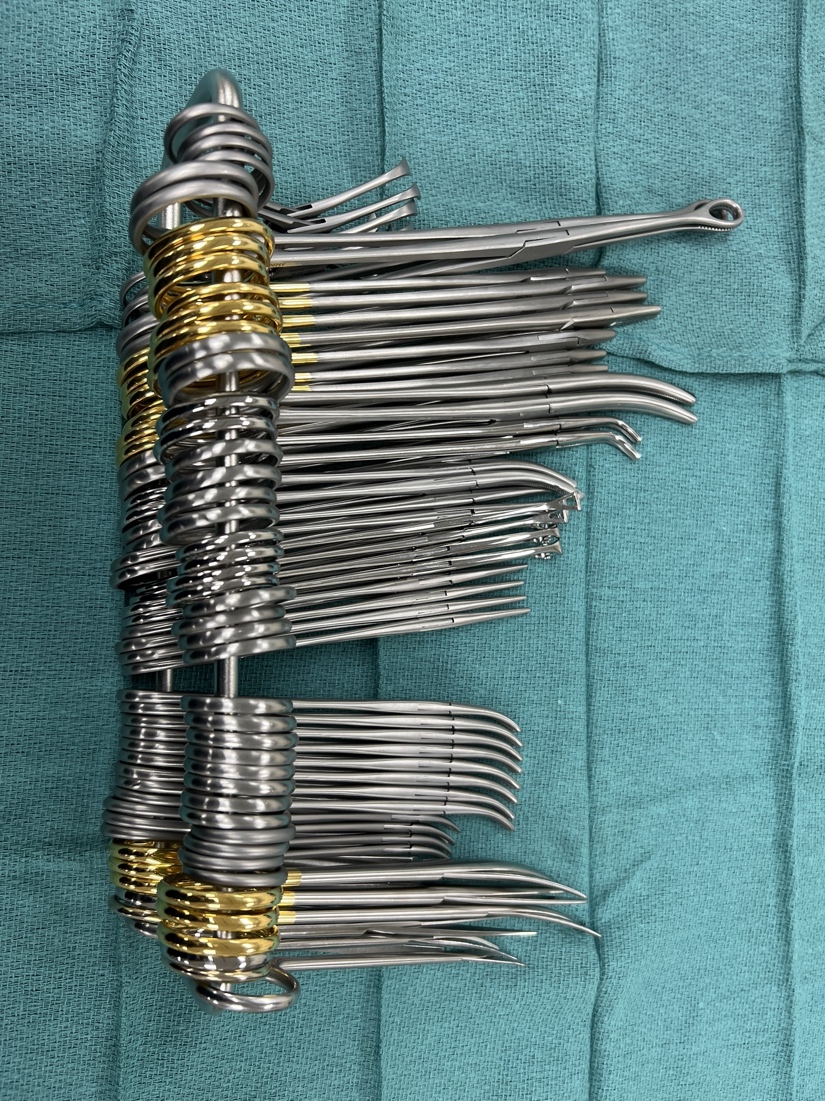
Differentiating Clamps
By recognizing the tips and purposes of clamps, it is easy to distinguish among micro, long, or minimally invasive instruments.
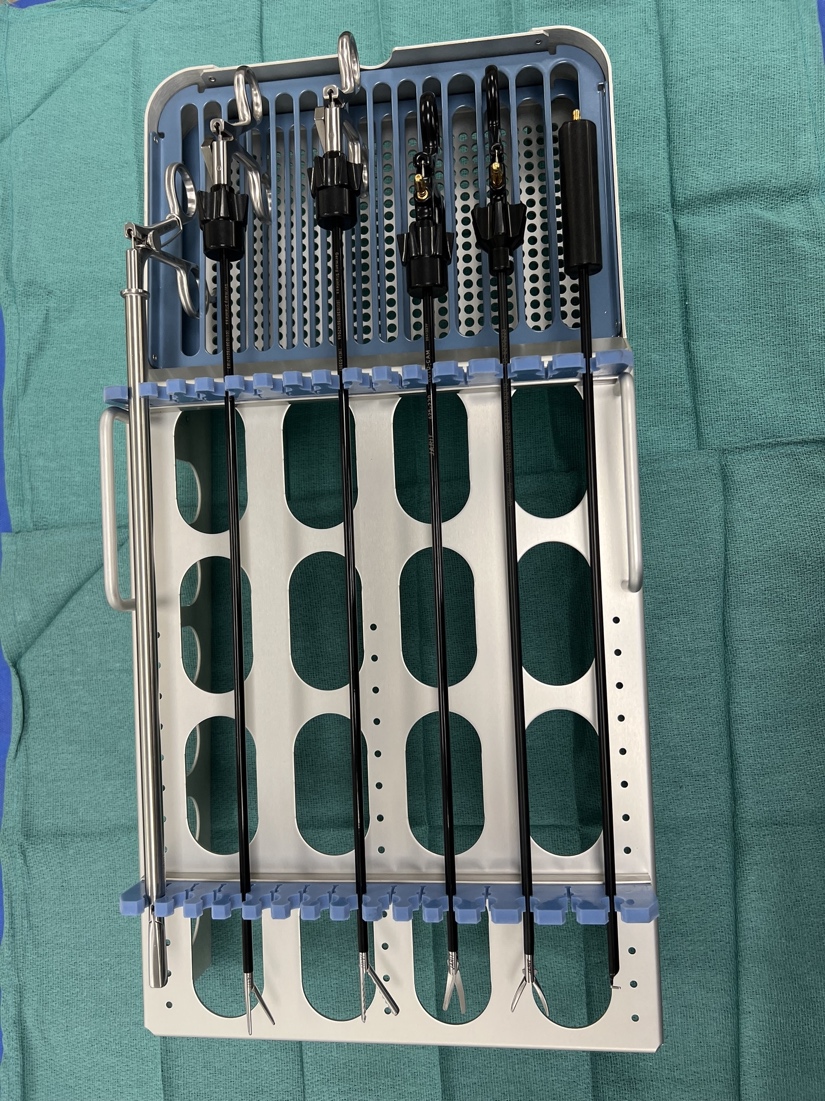
Example: The hemostat pictured with a curved tip and serrated clamp is used to grasp soft tissue or effect hemostasis. In a laparoscopic, or keyhole procedure, these clamps are needed to grasp tissue as well but must be designed to enter a hollow cannula that enters the abdomen. So, although the shaft is different, the clamp is the same.
Laparoscopic instrumentation handles and tips. The grasping and cutting tips are like those used in a general surgery setting.
Tissue Forceps are examples of non-clamping graspers, and the varied types can be seen in Alexander’s p. 189.
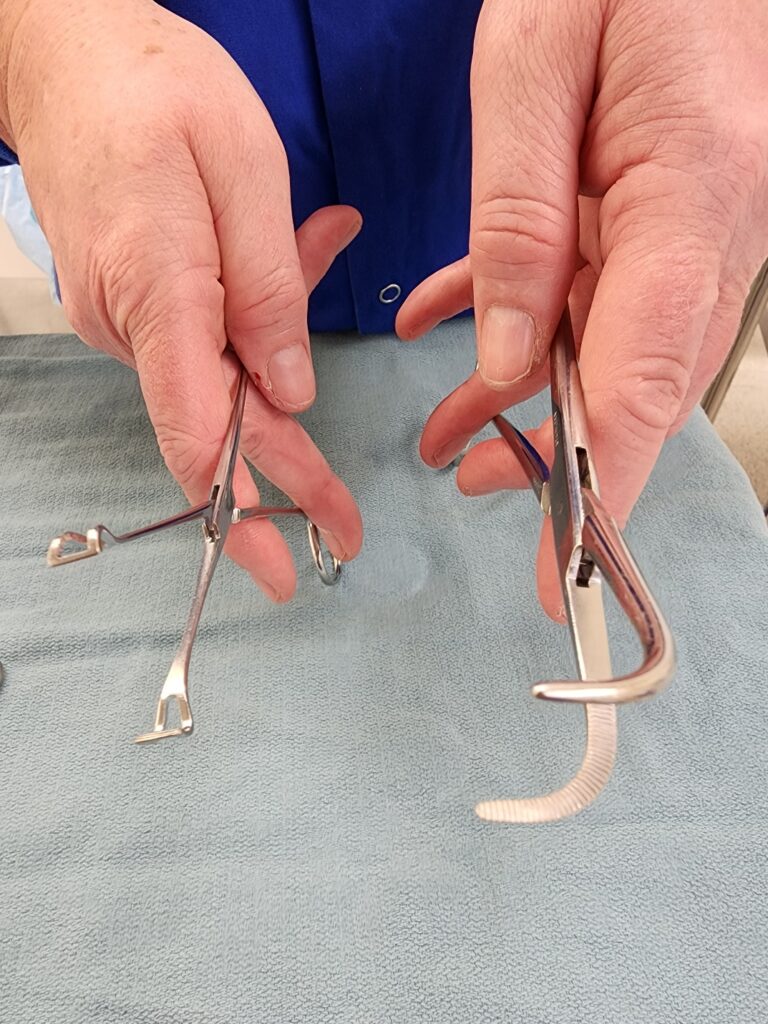
🧩 Practice Activity
Choose one or multiple images to answer the question. Select “Check” when you feel confident in your answer.
Retractors & Accessory Instruments
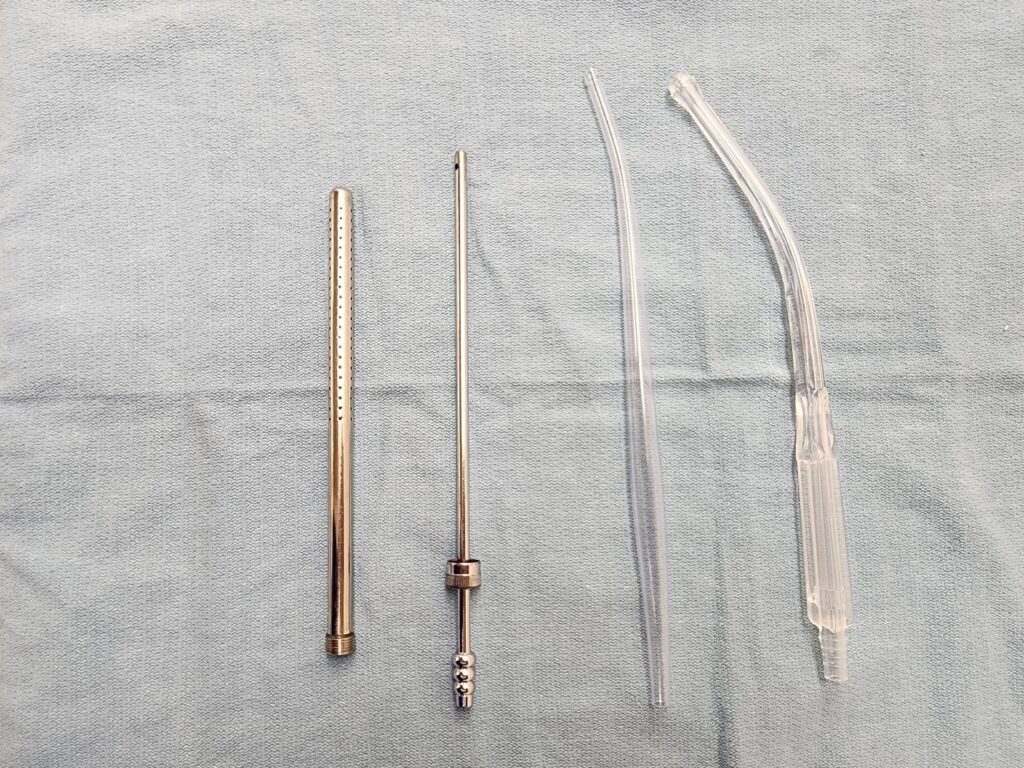
This photo shows commonly used suction tips for fluid removal and abdominal retractors used in general surgery to hold back soft tissue. All are part of the Retractor/Accessory instrument category.
Orthopedic retractors are shaped differently and are stronger as they need to retract bones. However, the suction tips used may be the same in both general and orthopedic surgery.

Passing Instruments
Now that you have seen instruments in all categories, it is important that you know how to correctly handle and pass them to the surgeon during a procedure.
Watch these videos on passing instruments, keeping in mind that your institution may set up their back tables and Mayo trays differently than portrayed and that even instrument names may differ.
It is important to know the safe, efficient ways to pass surgical instruments to the surgeon and assistants. Please note that in the video, the team demonstrates passing sharps by hand. ORNAC recommends that teams use a neutral zone. However, if hand-to-hand transfer must be done, it is important to be able to do so safely.
Breaking Down the Instrument Tray
As an introduction to how instruments are put together in a small set, watch the video General Minor Instrument Tray (18:05)
You have reviewed some common instruments and now will be introduced to specialized instrumentation.