Instrument Composition and Categories
Caring for surgical instruments is a complex process. It is critical for the perioperative nurse to understand the various qualities of instruments, to inspect them prior to use, and to maintain point-of-care practices that protect and maintain their longevity.
Instruments are the Tools of your Trade
It is essential to pay attention to the quality of surgical tools. In a large hospital, surgical instruments may be used in a multitude of sets in different departments. Some sets may not require costly stainless-steel instruments that are manufactured in the manner described in the readings. Different grades of instruments that are made of less expensive metals, such as chrome, are not as precise or durable as needed in the operating room. They may be used in minor trays, suture sets, or cut-down trays and stored in ER departments, labs, and diagnostic settings. (MDRAO, 2018).
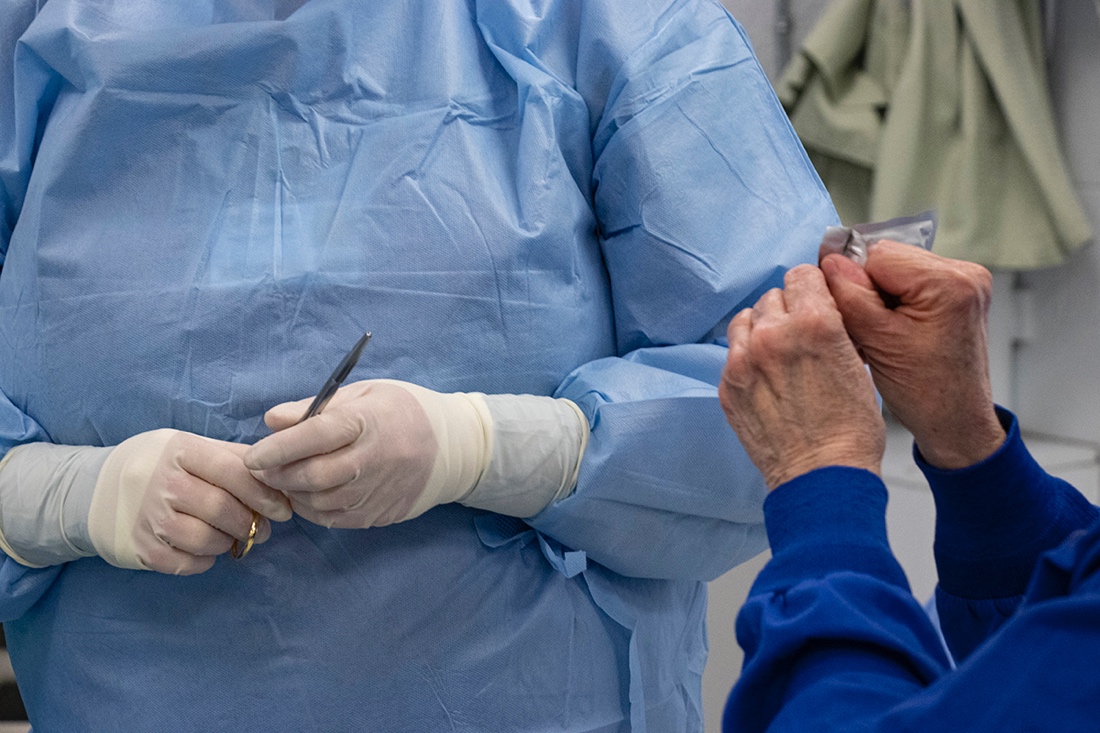
Considerations for Perioperative Nurses
If low-quality instruments are mistakenly added to surgical sets, they can be incompatible with the reprocessing regimen and ruin the integrity of the stainless-steel instruments by causing them to pit or rust.
Nurses must differentiate instrument quality through visualization, the manufacturer, and their precision of function. If an inferior instrument is found in a surgical setting, it is removed and set aside for the Medical Device Reprocessing personnel to handle it separately and return it to the correct set.
Perioperative nurses must inspect instruments on their set-ups to ensure they are well-aligned and functioning.
🧩 Practice Activity: Components of a Clamping Instrument
(select the + hotspots in the image to reveal information)
- Visually check the alignment of the shanks
- Inspect the box lock which is vulnerable to improper cleaning and may not open smoothly.
- Verify the alignment of the jaws and tips when the ratchet is closed. Improper closure may harm tissue or fail to occlude or stop bleeding as needed.
- Ensure the proper use of instruments. Instruments are designed for a purpose and if used for another task, may become damaged. For example, using a needle driver to bend a wire instead of a pair of pliers. This destroys the grip of the driver and causes suture needles to slip out of place. If the driver cannot be repaired, it may be discarded.
- Use surgical conscience in situations where you are being pressured to get something done quickly. Avoid using an instrument inappropriately; instead, wait for the correct one to be opened.
(MDRAO Manual, 2018)
🧠 Graded Activity
In Blackboard, complete the Graded Activity: Reflection Question.